
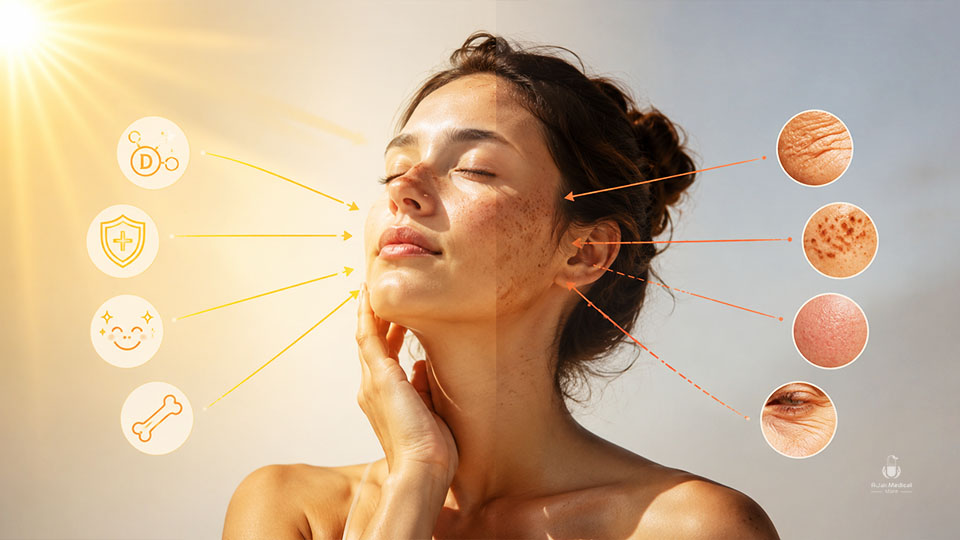
Sunlight is a natural part of everyday life. Whether you are walking outdoors, driving, exercising, or relaxing at the beach, your skin is exposed to sunlight daily. While sunlight can provide certain health benefits, too much exposure can also damage the skin over time.
Many people focus on skincare products but forget that daily sun exposure plays a major role in skin health. Understanding how sunlight affects your skin can help you make better skincare choices and protect your skin from unnecessary damage.
Why Sunlight Matters for Skin Health
Your skin is constantly exposed to environmental factors, and sunlight is one of the biggest influences on skin condition and appearance.
Daily sun exposure can affect:
- Skin hydration
- Skin texture
- Pigmentation
- Elasticity
- Aging signs
- Overall skin health
While moderate sunlight exposure may support overall wellness, excessive UV exposure can lead to long-term skin concerns if proper protection is not used.
Understanding Sunlight and UV Rays
Sunlight contains ultraviolet (UV) radiation, which directly affects the skin. The two main types of UV rays that impact skin health are UVA and UVB rays.
UVA Rays
UVA rays penetrate deep into the skin and are commonly linked to premature skin aging.
These rays may contribute to:
- Wrinkles
- Fine lines
- Uneven skin tone
- Loss of firmness
- Skin aging signs
UVA rays are present throughout the day and can pass through windows and clouds.
UVB Rays
UVB rays mainly affect the outer layer of the skin and are the primary cause of sunburn.
UVB exposure may lead to:
- Redness
- Burning
- Peeling
- Skin irritation
- Tanning
Both UVA and UVB rays can damage skin cells over time without proper skin protection.
Benefits of Sunlight for Skin and Wellness
Although too much sun exposure can be harmful, controlled and moderate sunlight exposure may provide certain benefits.
Supports Vitamin D Production
Sunlight helps the body naturally produce vitamin D, which plays an important role in overall wellness and bone health.
Helps Improve Mood
Natural sunlight may help support mood and energy levels. Many people feel more active and refreshed after spending time outdoors.
Supports Healthy Sleep Cycles
Daily exposure to natural light may help regulate the body’s sleep cycle and support better sleeping patterns.
May Support Certain Skin Conditions
In some cases, controlled sunlight exposure may help support certain skin conditions. However, excessive exposure can worsen skin sensitivity, so balance is important.
Risks of Too Much Sun Exposure
Excessive sunlight exposure can affect the skin in several ways.
Sunburn
Too much UV exposure can damage the skin and cause sunburn.
Common signs include:
- Redness
- Burning sensation
- Pain
- Peeling skin
- Sensitivity
Premature Aging
Long-term sun exposure may speed up visible aging signs, including:
- Wrinkles
- Fine lines
- Sagging skin
- Rough skin texture
Dark Spots and Pigmentation
UV rays can increase melanin production, which may lead to:
- Sun spots
- Hyperpigmentation
- Uneven skin tone
Dry and Dehydrated Skin
Excessive sunlight can weaken the skin barrier and reduce moisture levels, causing:
- Dryness
- Tight skin
- Flaking
- Dull-looking skin
Increased Risk of Skin Damage
Repeated and unprotected UV exposure can increase long-term skin health risks, including serious skin damage.
Signs Your Skin Is Getting Too Much Sun
Your skin often shows early signs when it is overexposed to sunlight.
Watch for symptoms such as:
- Redness
- Peeling
- Burning sensation
- Dryness
- Sensitivity
- Uneven skin tone
- Irritated skin
If these symptoms happen regularly, your skin may need better sun protection.
Daily Skincare Routine for Sun Protection
A simple daily skincare routine can help support healthier skin.
Morning Routine
- Use a gentle cleanser
- Apply moisturizer
- Wear sunscreen daily
Night Routine
- Cleanse the skin properly
- Use hydrating skincare products
- Apply moisturizer to support skin recovery
Common Myths About Sunlight and Skin
Myth: You Only Need Sunscreen on Sunny Days
Fact: UV rays can still affect the skin on cloudy days.
Myth: Tanned Skin Means Healthy Skin
Fact: Tanning is a sign of UV exposure and skin stress.
Myth: Darker Skin Does Not Need Sunscreen
Fact: All skin types benefit from sun protection.
When to See a Dermatologist
You should consider professional skincare advice if you notice:
- Severe sunburn
- Persistent pigmentation
- Changing moles
- Skin irritation that does not improve
- Unusual skin changes
FAQs
Is sunlight good or bad for skin?
Moderate sunlight exposure may offer benefits, but excessive exposure can damage the skin.
How much sunlight is healthy daily?
Short periods of daily sunlight exposure are generally enough for many people.
Can sunscreen prevent tanning?
Sunscreen helps reduce UV exposure and may help minimize tanning.
What SPF should I use daily?
SPF 30 or higher is commonly recommended for daily use.
Does sunlight cause premature aging?
Yes, repeated UV exposure may contribute to wrinkles and fine lines.
Can cloudy weather still damage skin?
Yes, UV rays can pass through clouds.
Is morning sunlight good for skin?
Morning sunlight is generally milder compared to midday sunlight.
Sunlight has both benefits and risks when it comes to skin health. While moderate sunlight exposure may support overall wellness, excessive UV exposure can lead to sun damage, dehydration, pigmentation, and premature aging.
Maintaining a proper skincare routine and using daily sun protection can help support healthier and better-protected skin over time.
At Ajak Medical, we offer trusted skincare and wellness products in the UAE to help support healthy, protected, and refreshed skin as part of your daily skincare routine. Ajak provides a wide range of beauty products designed to support skincare concerns related to dark spots, wrinkles, fine lines, uneven skin tone, and visible aging signs.