
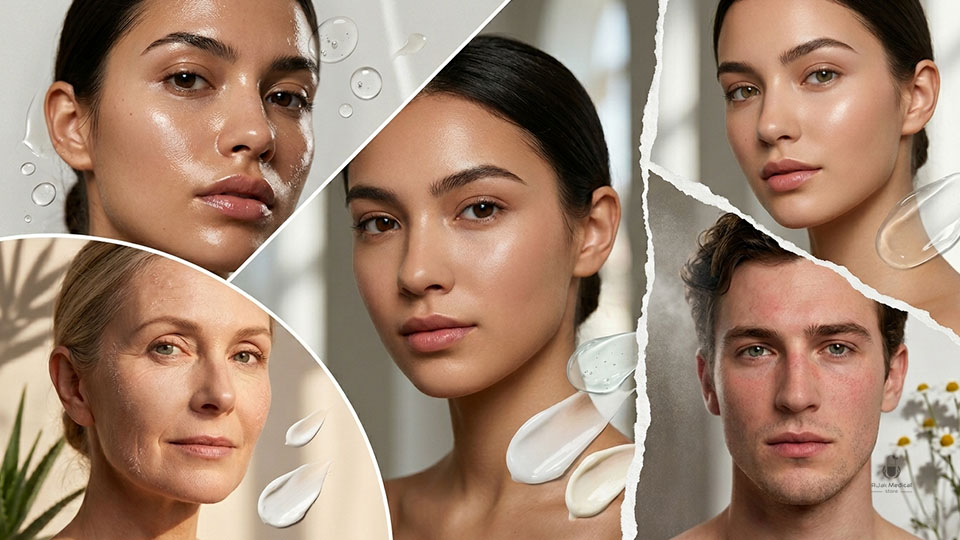
Understanding your skin type is essential for knowing how your skin behaves and what it naturally needs to stay healthy. Skin varies from person to person, and these differences mainly come down to oil production, moisture levels, and sensitivity.
When you recognize your skin type, it becomes easier to understand why certain concerns like acne, dryness, or irritation occur.
What Defines a Skin Type?
Skin type is primarily determined by the balance between oil (sebum) and moisture (water) in the skin. This balance affects texture, appearance, and how the skin responds to environmental conditions.
Several factors influence this balance:
- Genetics
- Hormonal changes
- Climate and weather
- Age
- Daily habits and lifestyle
These factors can cause your skin to behave differently over time.
Oily Skin
Oily skin produces excess sebum, which can make the skin appear shiny and more prone to clogged pores.
Key Characteristics:
- Noticeable shine, especially on the forehead, nose, and chin
- Enlarged pores
- Frequent blackheads or acne
- Heavier skin texture
Skin Needs:
Oily skin requires control and balance. While excess oil can cause issues, natural oil is still important for protecting the skin.
- Balanced oil production
- Clear pores
- Lightweight hydration
Over-cleansing or using harsh products can increase oil production instead of reducing it.
Dry Skin
Dry skin lacks sufficient oil and moisture, which weakens the skin’s protective barrier.
Key Characteristics:
- Tight or rough feeling
- Flaky or uneven texture
- Dull appearance
- Fine lines more visible
Skin Needs:
Dry skin needs consistent hydration and support to maintain its barrier.
- Moisture retention
- Nourishment
- Protection from moisture loss
Without proper hydration, dryness can lead to discomfort and increased sensitivity.
Combination Skin
Combination skin includes both oily and dry areas, usually with an oily T-zone and drier cheeks.
Key Characteristics:
- Oily forehead, nose, and chin
- Normal or dry cheeks
- Occasional breakouts in oily areas
Skin Needs:
This skin type requires a balanced approach that addresses both oil and dryness.
- Oil control in certain areas
- Hydration where needed
- Overall balance
Combination skin may change depending on the season or environment.
Sensitive Skin
Sensitive skin reacts easily to external factors such as products, weather, or pollution.
Key Characteristics:
- Redness
- Irritation or itching
- Burning sensation
- Reactions to new products
Skin Needs:
Sensitive skin requires gentle care and stability.
- Soothing support
- Minimal exposure to irritants
- Protection of the skin barrier
Triggers can vary from person to person, making consistency important.
Normal Skin
Normal skin is well-balanced, with stable oil and moisture levels.
Key Characteristics:
- Smooth texture
- Even tone
- Minimal breakouts
- Comfortable feel
Skin Needs:
Normal skin requires maintenance to preserve its balance.
- Basic hydration
- Protection from environmental damage
- Consistent care
Can Skin Types Change?
Yes, skin type can change over time due to:
- Weather conditions
- Hormonal shifts
- Aging
- Lifestyle habits
For example, skin may become oilier in humid conditions and drier in colder climates. With age, oil production usually decreases.
Environmental Impact on Skin
External factors can influence how your skin behaves daily:
- Humidity can increase oiliness
- Cold weather can cause dryness
- Pollution can lead to clogged pores
- Sun exposure can damage the skin barrier
These changes can affect all skin types differently.
Common Misunderstandings
- Oily skin does not need hydration: All skin types need moisture
- Dry skin and sensitive skin are the same: They are different conditions
- Skin type never changes: It can vary over time
Why Skin Type Awareness Matters
Understanding your skin type helps you:
- Recognize skin concerns early
- Avoid unsuitable products
- Maintain better skin balance
Healthy skin depends on how well its natural needs are supported.
FAQs
1. Can I have more than one skin type?
Yes, combination skin includes both oily and dry areas, and sensitivity can occur with any skin type.
2. Does skin type change with age?
Yes, skin often becomes drier as oil production decreases over time.
3. How do I know my skin type?
You can observe how your skin feels and behaves throughout the day, especially after cleansing.
4. Is sensitive skin permanent?
Not always. It can be temporary and triggered by external factors.
5. Why is my skin oily and dry at the same time?
This may indicate combination or dehydrated skin.
Different skin types have different characteristics and needs. Understanding these differences helps explain how skin behaves and what it requires to remain balanced and healthy.
At Ajak Medical, we aim to help you better understand your skin and make informed skincare choices.
We provide the best skincare products in UAE for all skin types, helping you maintain healthy and balanced skin.



1 Comment
wonderful points altogether, you simply gained a new reader. What would you recommend in regards to your post that you made a few days ago? Any positive?